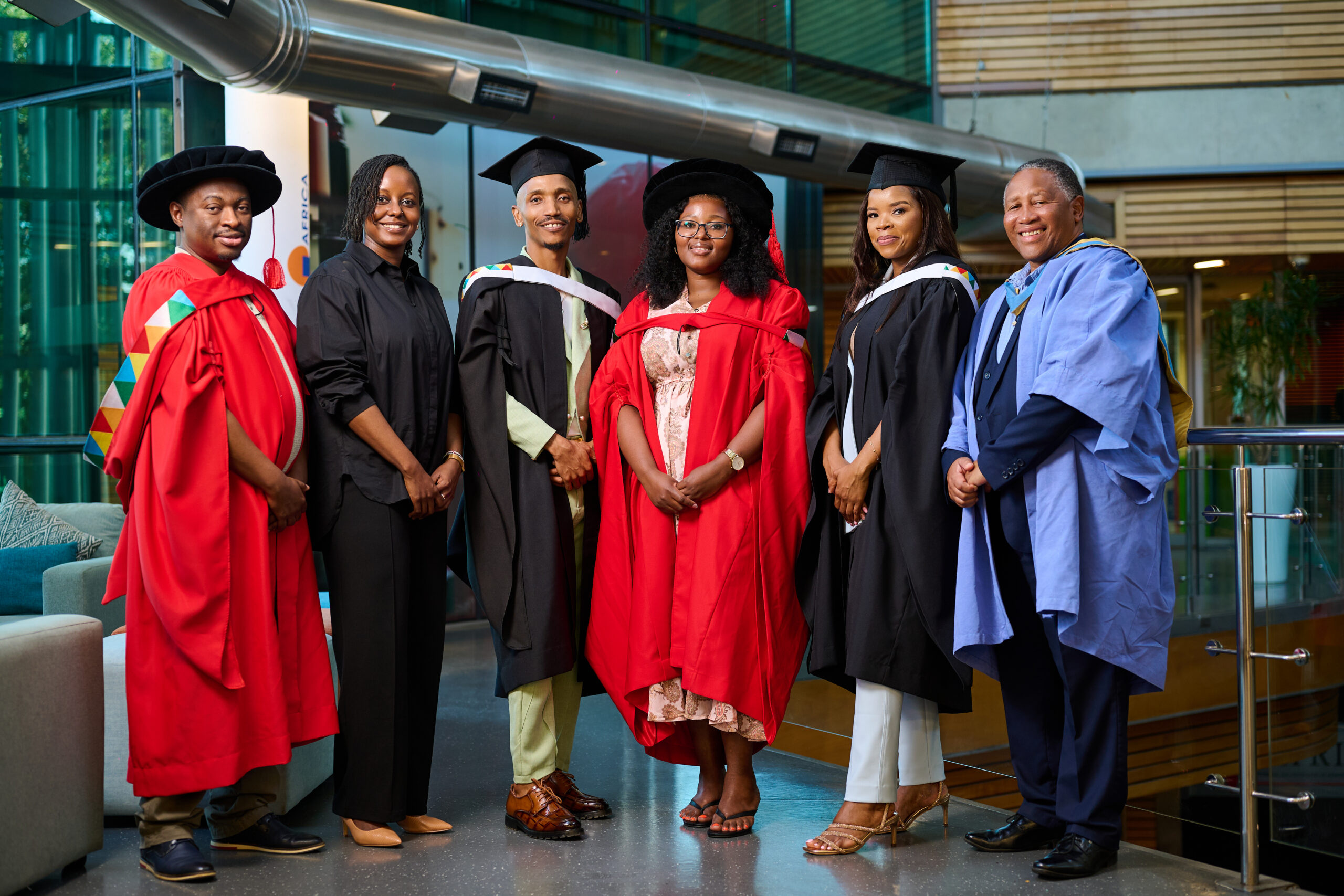
Three AHRI trainees are celebrating important academic milestones after graduating from the University of KwaZulu-Natal. PhD graduate Khanyisile Mngomezulu, and Master’s graduates Ata Mokoena and Nondumiso Dlamini, have each contributed research addressing important health challenges, from SARS-CoV-2 and HIV to mental health among adolescents living with HIV.
PhD graduate Khanyisile Mngomezulu, supervised by Prof Nceba Gqaleni, investigated the potential of traditional medicine in the reactivation of latent HIV-1. Her research examined the antiviral, latency-reversing and immunomodulatory effects of Product Nkabinde and Gnidia sericocephala using different in vitro HIV-1 models. The findings contribute to understanding the potential of traditional medicines as sources of bioactive compounds that could support approaches to targeting HIV-1 latency. Reflecting on her PhD, Khanyisile described it as a journey of perseverance, discovery and personal transformation, noting that progress is not always measured by how quickly you reach the finish line, but by the resilience, growth and knowledge gained along the way.
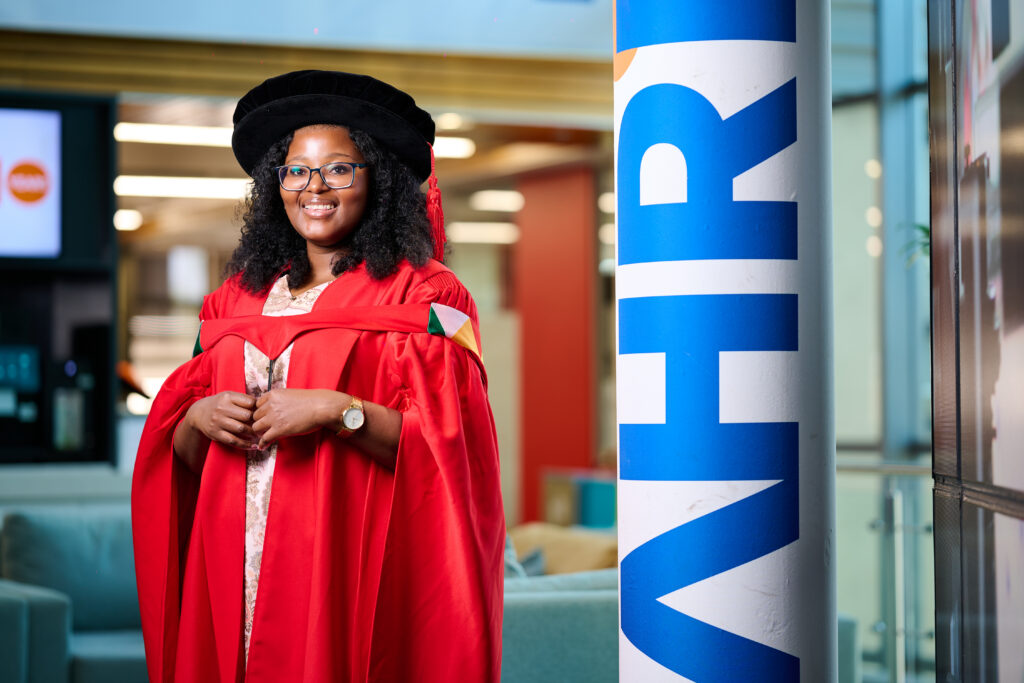
(Above: Dr Khanyisile Mngomezulu)
Master’s graduate Ata Mokoena, supervised by Prof Nceba Gqaleni, investigated the antiviral and immunomodulatory effects of two South African traditional medicines, Product Nkabinde and Gnidia sericocephala, against the SARS-CoV-2 D614G variant. The study explored whether the medicines could inhibit viral replication and influence immune responses during infection, with findings showing promising activity when administered before infection. For Ata, the research brought together his interests in biomedical science and African traditional medicine, while highlighting the importance of scientifically investigating traditional knowledge. “Completing my master’s taught me that research is as much about resilience and perseverance as it is about scientific discovery,” he said.

(Above: Ata Mokoena)
Nondumiso Dlamini, supervised by Prof Nothando Ngwenya and co-supervised by Dr Nduku Wambua, explored how young people living with HIV can contribute directly to mental health research. As part of the PHOLA project, her master’s research established a mental health lived experience group for adolescents aged 16–19 living with HIV in rural KwaZulu-Natal. Using a participatory approach, Nondumiso worked with young people and research and community partners to establish the group, which the adolescents named Siyanqoba Youth Empowerment (SIYE). The group now contributes to adapting intervention materials, refining data collection tools and informing study decisions. Reflecting on her journey, Nondumiso said that completing her master’s strengthened her confidence as a researcher and reinforced her commitment to research that meaningfully includes young people’s voices and experiences.
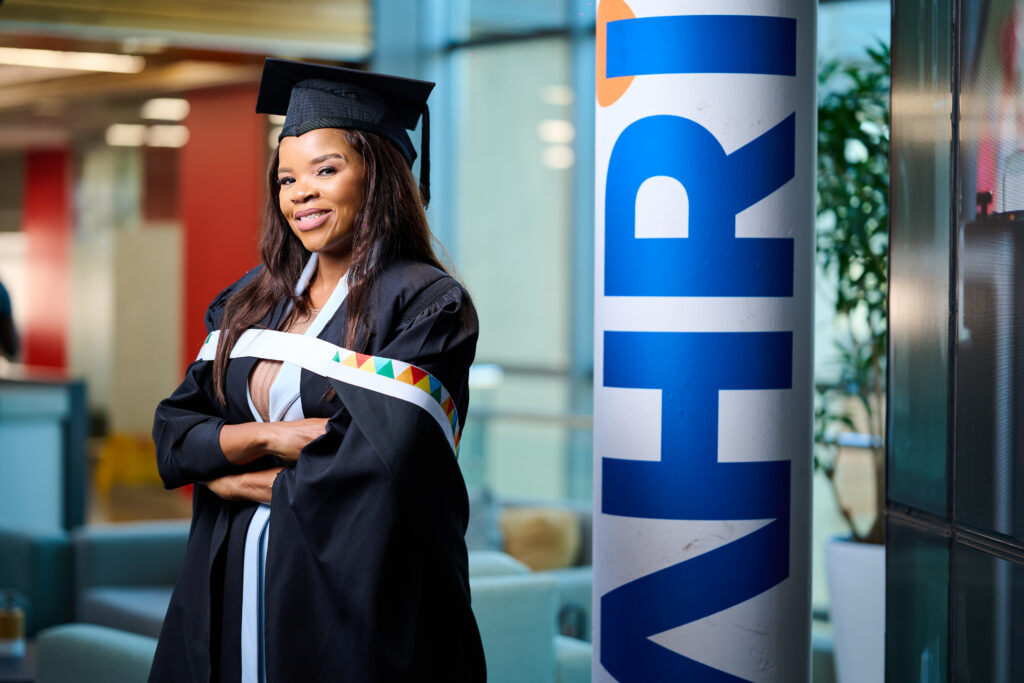
(Above: Nondumiso Dlamini)
Together, their work highlights the breadth of research being undertaken by AHRI trainees and the importance of developing the next generation of researchers to address health challenges through locally relevant science.
AHRI congratulates Ata, Nondumiso and Khanyisile on their achievements and wishes them well as they continue their research journeys.